
Small Batches. Personal Attention. Confident Readers.
Only 5–6 children per batch, so your child gets more opportunities to interact with the teacher, practise phonics skills and receive individual guidance.
Structured online phonics classes designed to help young learners build strong foundations in sounds, blending, reading and spelling — an 8-month programme, twice a week, 1 hour per class.
Find your child's starting level and get guidance on the right class.
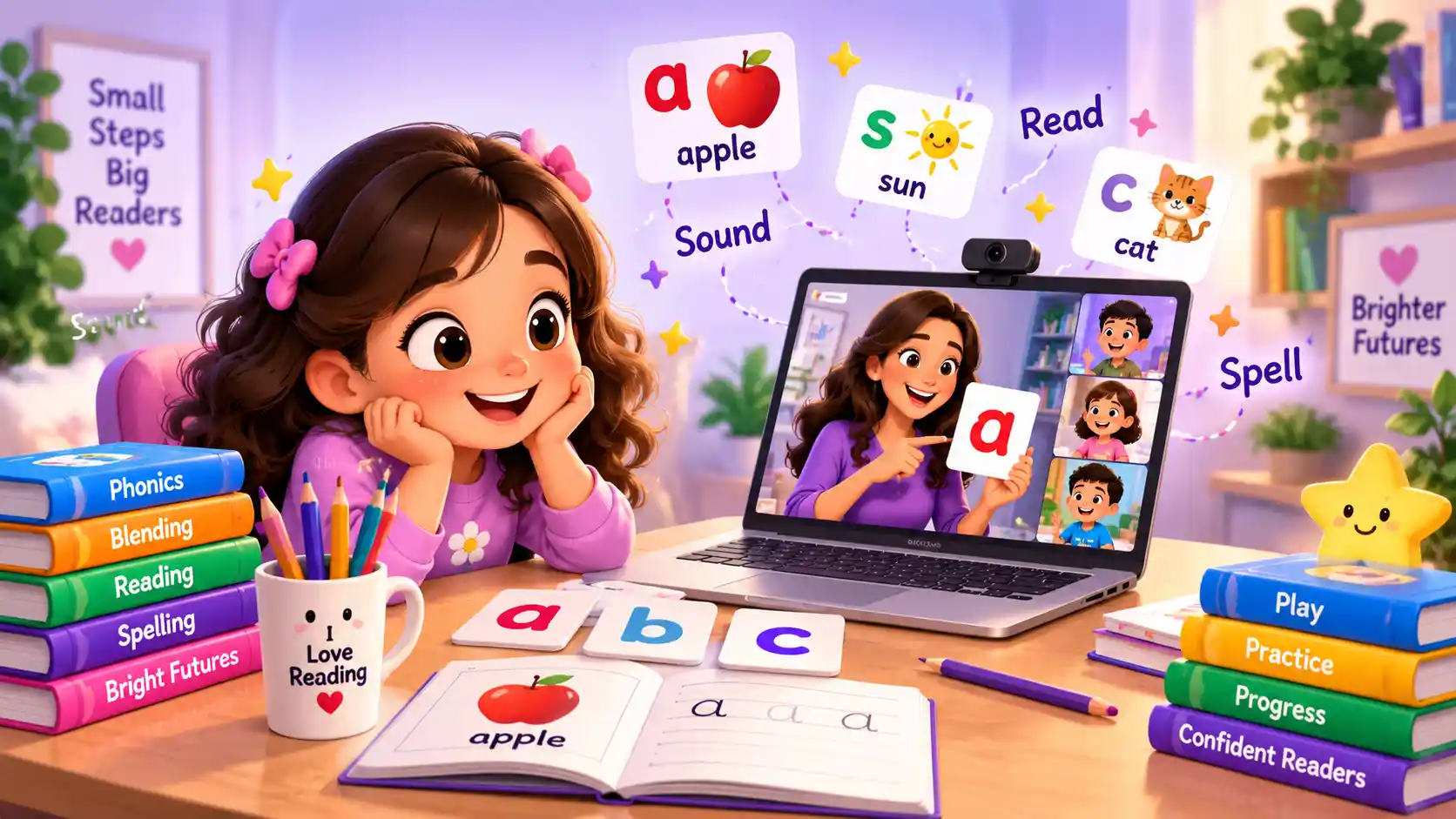
Is Your Child Just Starting to Learn Reading?
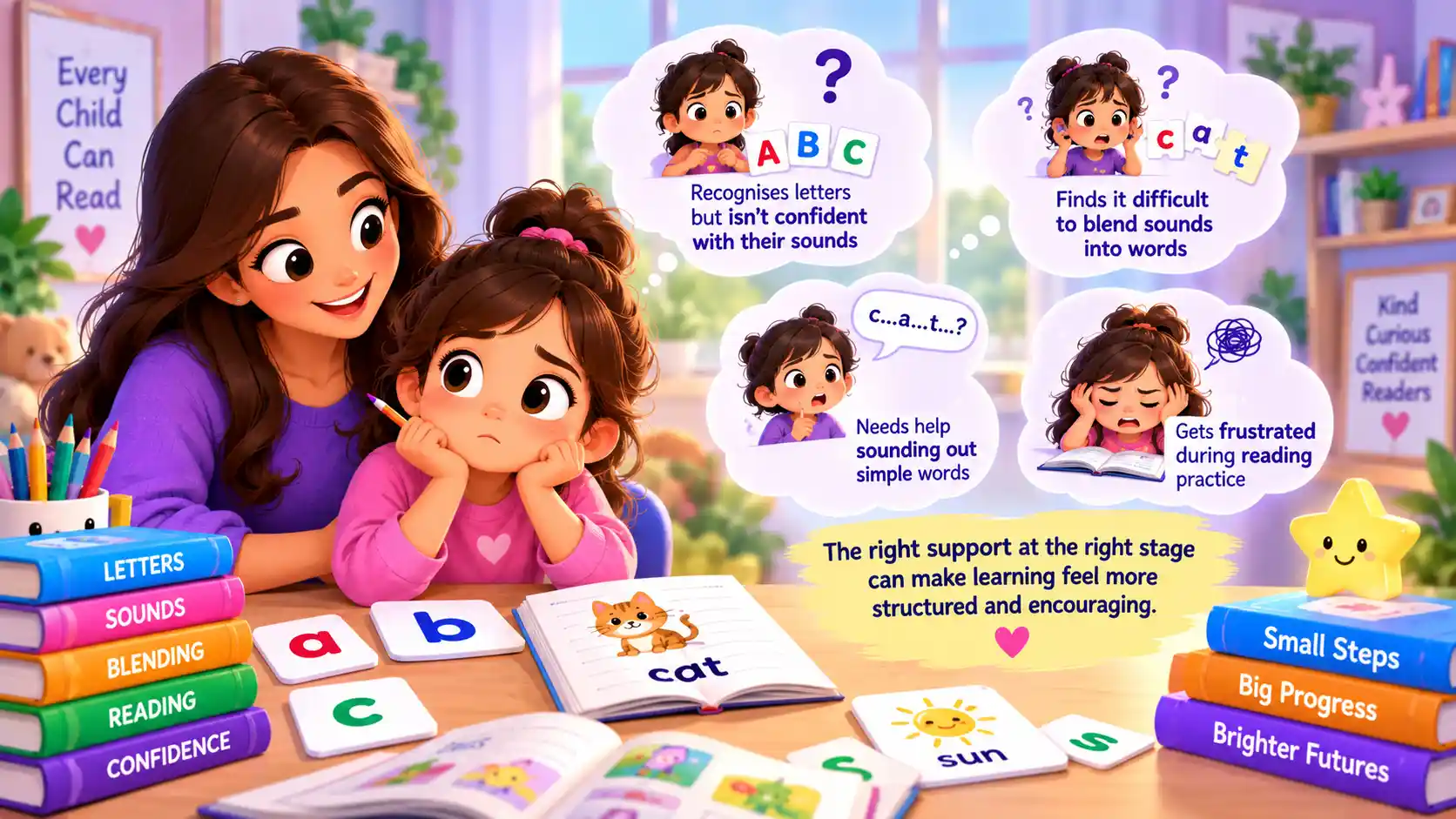
You may notice your child:
The right support at the right stage can make learning feel more structured and encouraging.
Your Child Shouldn't Get Lost in the Crowd
We intentionally keep our batches to just 5–6 children so teachers can give learners more individual attention and guidance during live lessons.
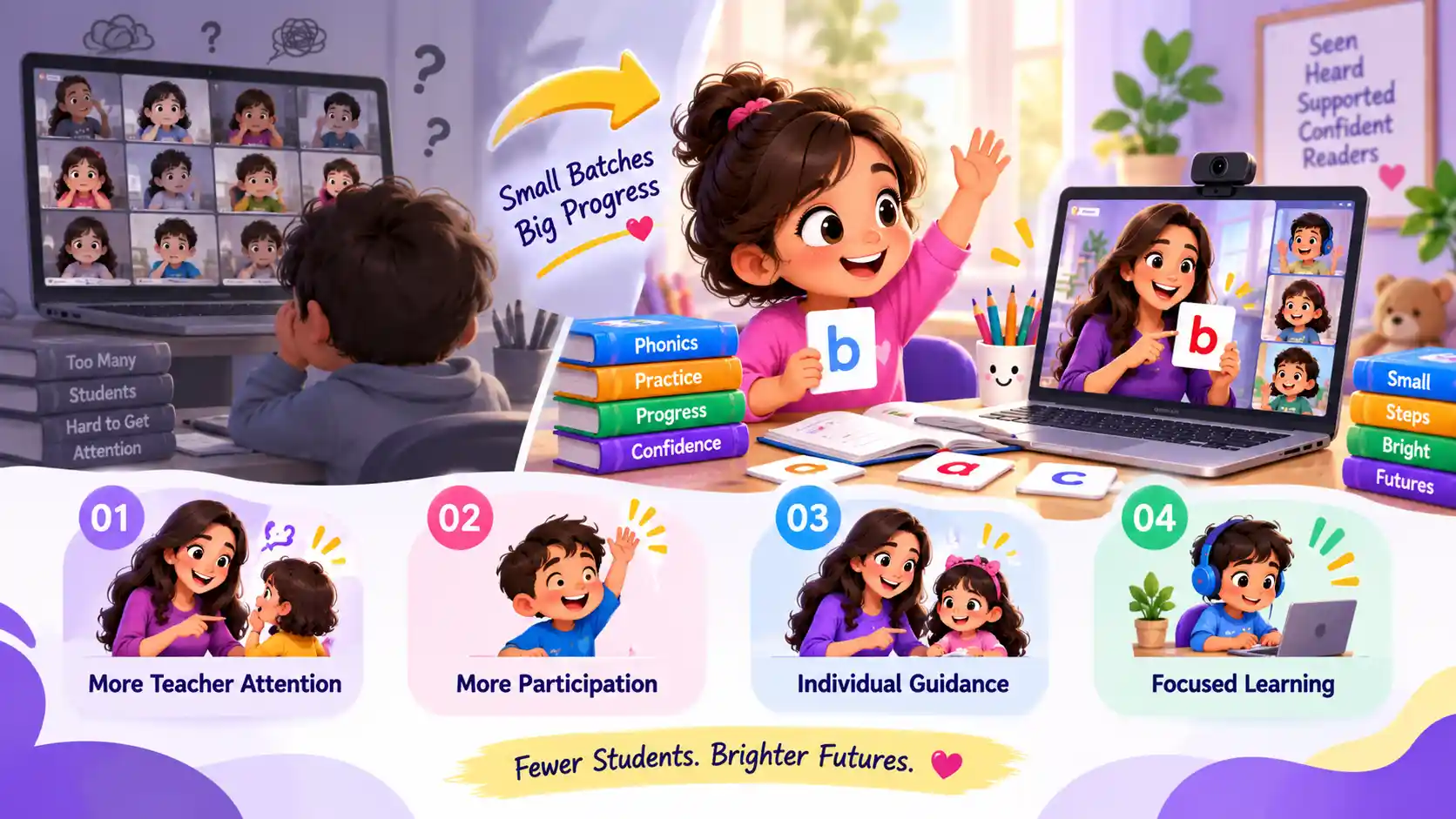
More Teacher Attention
More opportunity for the teacher to notice and respond to each child's learning needs.
More Participation
Children have more opportunities to answer, practise and interact.
Individual Guidance
Teachers can provide support when a child needs additional help.
Focused Learning
A smaller learning environment can make online lessons feel more focused and manageable for young learners.
Why Parents Choose Jolly Reading
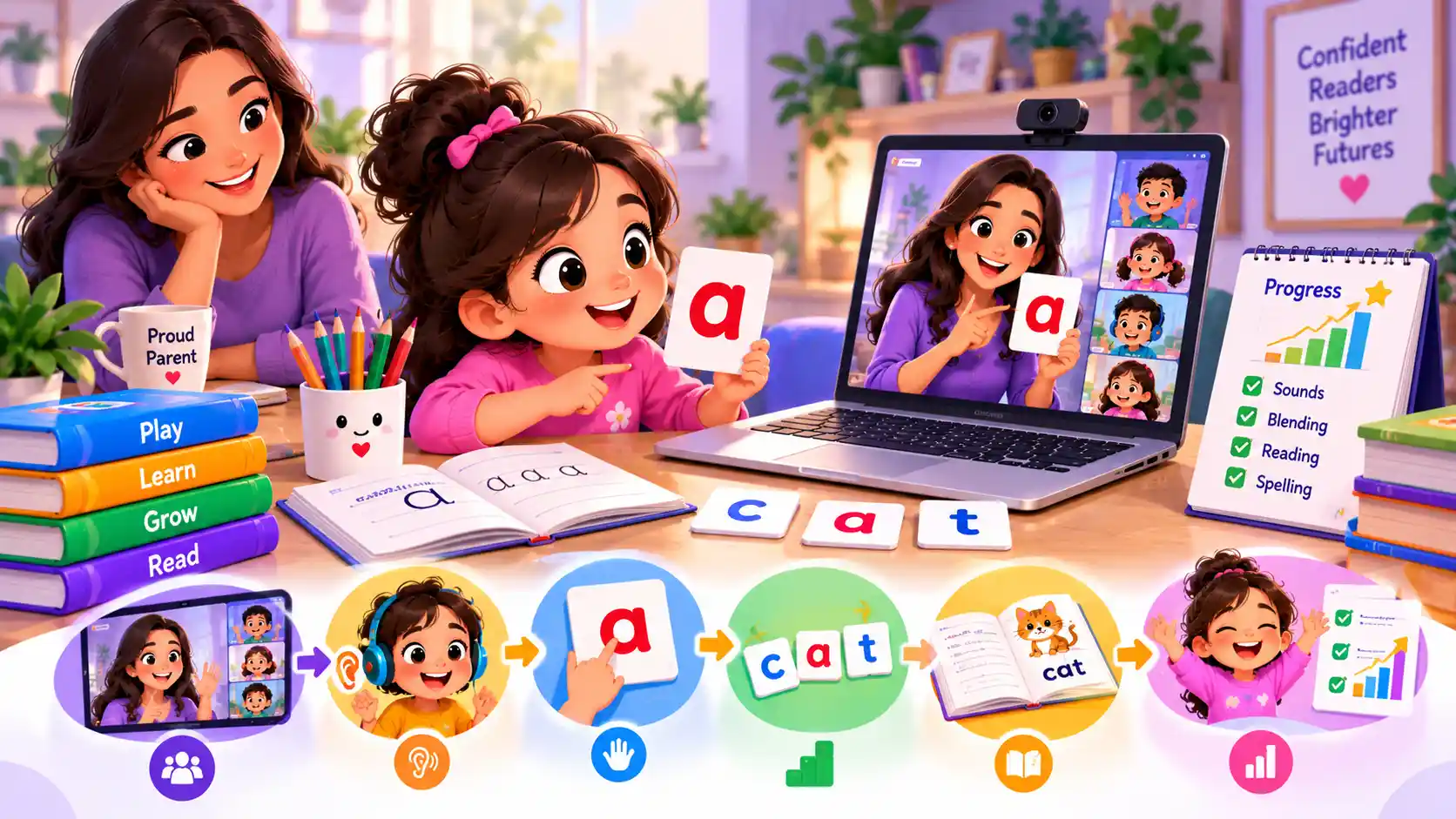
Only 5–6 Children Per Batch
Small groups mean more opportunities for individual attention.
Live Online Teaching
Every class is taught live by a phonics-trained educator.
Structured Phonics Pathway
Children follow a clear, sequential progression through sounds and skills.
Multi-Sensory Approach
Sounds, letters, actions and practice combined in every lesson.
Age & Level Appropriate
Classes matched to your child's current phonics level.
Certified Trainer
Taught by an educator certified in Jolly Phonics & Jolly Grammar, with 23+ years of teaching experience.
Multi-Sensory Synthetic Phonics
Children learn phonics through a structured approach that connects sounds, letters, actions and practice — over an 8-month programme, twice a week, 1 hour per class. New to the method? See what Jolly Phonics is and how it works.
A multi-sensory, systematic synthetic phonics method developed in the UK by teachers Sue Lloyd and Sara Wernham.
It teaches the actual sound each letter makes (/b/), not the letter name (“bee”).
Each of the 42 letter sounds is introduced through a story and a song, alongside pre-writing and writing practice for letter formation.
Your child practises alongside just 5–6 other children, guided live by the teacher.
Multiple senses working together can help young children remember sounds more easily.
The same sounds are used for blending (reading) and segmenting (spelling).
What Your Child Learns — and Why It Matters
The full Phase 1 curriculum your child works through over the programme:
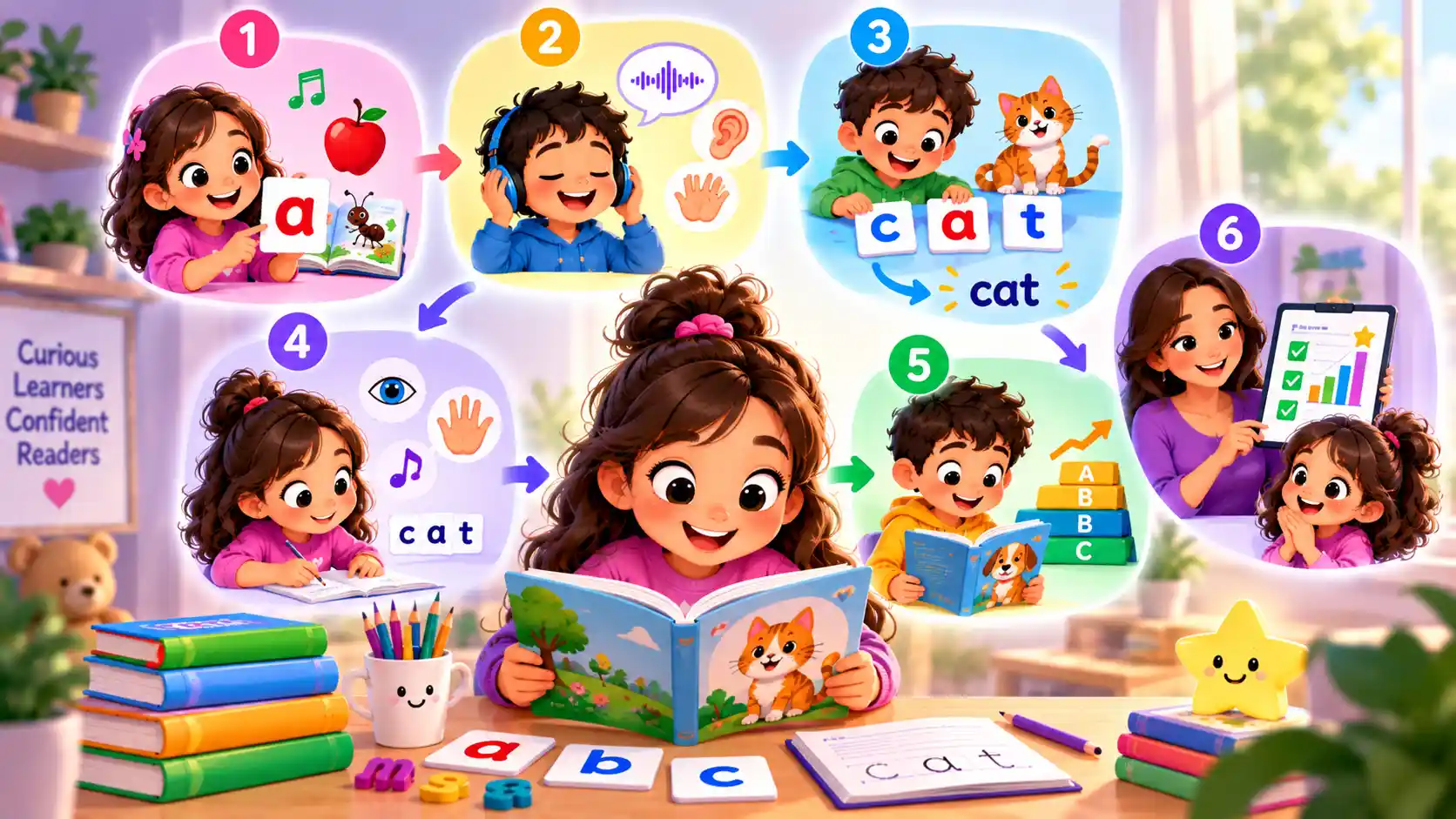
All 42 English letter sounds through stories and songs, plus the concept of vowels and consonants.
Hearing and naming sounds confidently is the foundation for connecting sounds to letters — the first step before reading any word.
Structured activities that build your child's ability to hear and play with individual sounds in words.
This listening skill underpins blending and segmenting — without it, sounding out words is much harder.
Blending sounds together to read words, and segmenting words into sounds to spell them — /c/, /a/, /t/ → cat.
This is often exactly where children get stuck — knowing the sounds but not yet joining them into words. Practising blending now can help your child move from “I know the sounds” to “I can read the word,” and the same skill becomes the foundation for reading longer, more complex words later.
Identifying common sight words, and reading simple decodable books, phrases and sentences.
Applying phonics to real books — not just sounds in isolation — helps build genuine reading confidence.
Dictation and spelling rules, alternative vowel sounds, and rhyming word families.
This strengthens spelling accuracy and prepares your child for more complex spelling patterns in later years.
Story listening and narration, vocabulary building, and reading/listening comprehension exercises.
Reading is only useful once a child understands what they've read — this builds that understanding alongside decoding skill.
Applying Rules to Real Reading
Most phonics programmes stop at teaching the rules. We go further.
Knowing phonics rules on their own isn't enough — so once the rules are learned, your child gets plenty of guided practice actually reading with them: short sentences, short stories, and even newspaper headlines.
This combined practice is what turns rule knowledge into real reading ability — your child learns to read by actually reading, not just reciting sounds.
Can a 4–6 Year Old Really Learn Phonics Online?
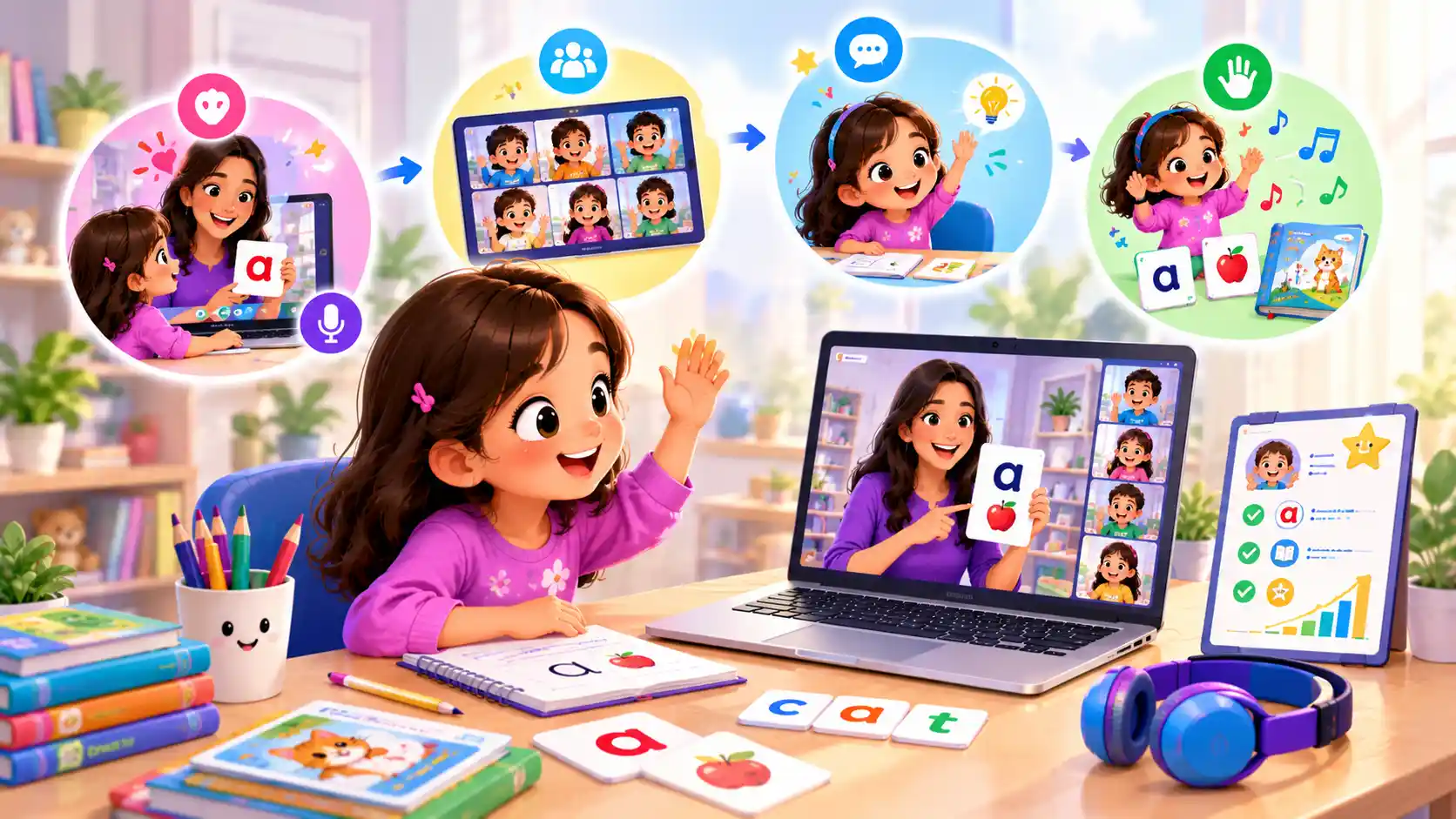
It's a fair question. Here's what actually makes small-batch live classes work for young learners:
Book a Free Demo ClassLive teacher interaction
Your child interacts directly with a real teacher, not a recording.
Only 5–6 children
Small enough for the teacher to keep every child engaged.
Frequent participation
More chances to speak, answer and practise in every session.
Multi-sensory activities
Songs, actions and stories keep young learners engaged, not just listening.
Your Child's Learning Journey
Free Phonics Assessment
Understand where your child is starting.
Find the Right Level
Match your child to an appropriate learning stage.
Small-Batch Live Classes
Learn with only 5–6 children per batch.
Structured 8-Month Programme
Twice a week, 1 hour per class, building steadily over 8 months.
What Your Child Gets
- Live online phonics classes — 1 hour, twice a week, over 8 months
- A small batch of only 5–6 children
- Structured phonics programme covering all 42 letter sounds
- Multi-sensory learning approach — stories, songs and actions
- Child-friendly books, worksheets and colourful flashcards
- Learning reinforced through memory games, videos and online games
- Periodic assessments with review of your child's progress
- A free initial phonics assessment
Parents Trust Us With Their Children's Reading Journey
“My heartfelt gratitude to you, Megha miss, for imparting quality English language skills to my son Neil. Your method of teaching has ensured he'll never have any problem with English learning in the future.”
“Aarav developed reading fluency and expressive writing skills under her teaching. Megha miss built confidence in him and motivated him for English speaking.”
Why You Can Trust Us With Your Child's Reading Development
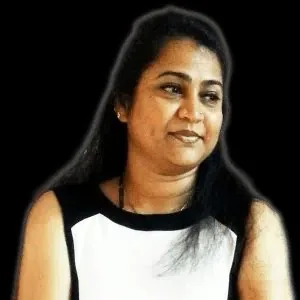
Megha Vyas
Megha Vyas is the founder of Jolly Reading and a passionate literacy educator with over 23 years of experience teaching phonics. She specialises in helping teachers, schools and parents build strong reading foundations through structured phonics instruction.
- Certified in Jolly Phonics & Jolly Grammar through Jolly Phonics CPD College, UK
- Former Air India cabin crew — brings expert pronunciation and phonemic awareness to every session
- Certified Remedial Educator, with hands-on experience supporting children with reading and spelling difficulties
- 2000+ teachers trained across India through structured Jolly Phonics methodology
“To empower learners with the skills, confidence, and proven strategies needed to become successful, lifelong readers.”
Read Full StoryAre You a Teacher or Educator?
Explore our phonics teacher training programme — a separate pathway for educators, not for enrolling a child directly.
Explore Teacher Training →Online Phonics Classes — Frequently Asked Questions
What age are the classes for? +
Our online phonics classes are designed for children aged approximately 4–6 who are beginning their reading journey.
Is this suitable for a child who is completely new to phonics? +
Yes. The programme starts from the very first letter sounds, so no prior phonics knowledge is needed.
How do I know which level is right for my child? +
Book a free demo class (1 week). We'll look at your child's current sound knowledge and reading level and recommend the right starting point.
Are classes live or recorded? +
Every class is taught live online by a phonics-trained educator — never pre-recorded.
How long is each class? +
Each class is 1 hour long, held twice a week, as part of an 8-month programme.
How many children are in a batch? +
Only 5–6 children per batch. We keep batches intentionally small so every child gets more opportunities for individual attention and guidance.
Will my child get individual attention? +
With only 5–6 children per batch, there are more opportunities for the teacher to notice how each child is doing and respond directly during the lesson.
What does my child need for online learning? +
A laptop or tablet with a working camera, a stable internet connection, and a quiet space to join from.
How do parents know about their child's progress? +
Progress is reviewed periodically throughout the programme as part of the structured curriculum.
What happens after the free demo class? +
We share what we found during the assessment and recommend the right starting point and batch for your child.
What is the fee? +
The full 8-month programme is ₹18,000. Pricing is occasionally updated, so please confirm the current fee when you enquire.
Are there trial or assessment options before I commit? +
Yes — a free demo class for 1 week is the first step, so you can understand your child's level and the right class before enrolling.
Ready to Build Your Child's Reading Foundations?
Start with a free demo class and find the right learning pathway for your child.
Only 5–6 Children Per Batch